

How E-commerce Websites Can Rank in AI Search in 2026: E-commerce SEO is changing as shoppers increasingly use AI-powered search experiences to discover products, compare options, and decide what to buy. To improve visibility, online stores should strengthen traditional SEO, provide detailed, original product information, use Product structured data, maintain accurate Merchant Center feeds, and make product pages easy for search engines to crawl and understand.
Search is becoming more conversational, contextual, and AI-driven in 2026. Instead of typing short queries such as “best running shoes”, shoppers may ask detailed questions such as:
“What are the best running shoes for beginners under $100 that offer good cushioning and are suitable for daily road running?”
This change is important for e-commerce businesses because the way customers discover products is evolving. We have found an e-commerce development company in India known as Acnosoft Technology.
Google’s AI features, including AI Overviews and AI Mode, can synthesize information from multiple sources and help users explore products and shopping-related questions. Google has also published specific guidance for website owners on improving visibility in its generative AI search experiences.
For e-commerce brands, the goal is no longer simply to rank a product page for one keyword. Businesses need to make their products, categories, brand information, reviews, pricing, availability, and expertise easy for both users and search systems to understand.
What is AI Search? How E-commerce Websites Can Rank in AI Search in 2026
AI search refers to search experiences where artificial intelligence helps understand a user’s intent and provides synthesized answers, recommendations or product information.
Google’s AI Overviews and AI Mode are examples of this evolving search experience.
For e-commerce businesses, AI search can influence:
- Product discovery
- Brand visibility
- Product comparisons
- Category research
- Buying decisions
- Informational searches before purchase
- Local shopping searches
- Long and conversational queries
Google says its generative AI search features are grounded in its existing Search ranking and quality systems. That means SEO has not become irrelevant; rather, strong SEO fundamentals remain important for AI search visibility.
1. Build Strong Product Pages
Your product page is one of the most important assets for AI-driven shopping visibility.

A weak product page might contain only:
Product name + price + one short description + Buy Now button
That gives search engines and shoppers limited information.
Instead, create comprehensive product pages containing:
- Detailed product description
- Key specifications
- Product dimensions
- Materials
- Features
- Benefits
- Available sizes
- Colors and variants
- Price
- Availability
- Shipping information
- Return policy
- Warranty details
- Product images
- Videos where useful
- Customer reviews
- FAQs
- Related products
The more useful and accurate information you provide, the easier it becomes for search systems and customers to understand the product.
2. Write Product Descriptions for Humans, Not Just Search Engines
One of the biggest mistakes e-commerce websites make is copying manufacturer descriptions.
For example, hundreds of websites may use exactly the same description supplied by a manufacturer.
That creates little additional value.
Instead, write original product content that answers the questions a potential buyer actually has.
For example, instead of:
“Premium wireless headphones with noise cancellation and Bluetooth connectivity.”
You could explain:
- Who the headphones are suitable for
- How effective the noise cancellation is
- Whether they’re suitable for travel
- How comfortable they are for long sessions
- Battery expectations
- Connectivity options
- Best use cases
- Important limitations
Google’s AI optimization guidance emphasizes providing unique, valuable content rather than simply producing commodity information.
3. Understand Conversational Search Intent
Traditional keyword research often focuses on phrases such as:
“best laptop”
But AI search encourages more detailed queries:
“Which laptop is best for graphic designers under $1,000?”
Your content should therefore answer different levels of search intent.
Informational Intent
Examples:
- What is the difference between OLED and LED?
- How much RAM does a gaming laptop need?
- Are running shoes good for walking?
Commercial Investigation
Examples:
- Best laptops for graphic designers
- Best smartphones under $500
- Best running shoes for beginners
Transactional Intent
Examples:
- Buy Nike running shoes
- Samsung Galaxy S26 price
- Buy wireless headphones online
Creating content around these different intents gives your brand more opportunities to appear throughout the buying journey.
4. Use Product Structured Data Correctly
Structured data helps search engines understand important information about your products.
For e-commerce websites, Product structured data can communicate information such as:
- Product name
- Brand
- Description
- Image
- SKU
- Price
- Currency
- Availability
- Product condition
- Ratings
- Reviews
- Product variants
Google provides specific documentation for product and merchant listing structured data, and its documentation has continued to evolve in 2026, including improvements around product categories, sale pricing and product variants.
However, structured data should accurately represent the visible information on your page.
Never add misleading or inaccurate schema simply to obtain search visibility.
5. Optimize Product Variants
E-commerce websites often have multiple versions of the same product.
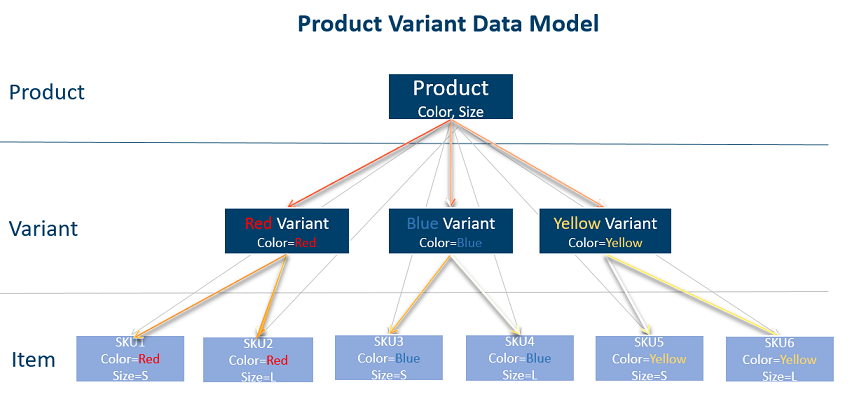
For example:
- Small / Medium / Large
- Black / White / Blue
- 128GB / 256GB / 512GB
- Different pack sizes
Google expanded documentation around product variants and distinct URLs, making variant handling particularly relevant for e-commerce SEO.
Make sure important variants are:
- Clearly identifiable
- Properly linked
- Crawlable
- Associated with the correct product
- Correctly represented in structured data
- Connected to appropriate URLs where applicable
This can help search engines better understand the relationship between different versions of a product.
6. Keep Your Google Merchant Center Feed Accurate
For e-commerce brands, Google Merchant Center should be an important part of the search strategy.

Your product feed should accurately communicate:
- Product title
- Description
- Price
- Availability
- Images
- Brand
- GTIN where applicable
- Product category
- Shipping information
- Returns information
- Product variants
Google’s current AI-search guidance specifically recommends using Merchant Center and product feeds to improve the ability of products to appear across Google Search and generative AI experiences.
This is particularly important because product information can change frequently.
If your website says one price but your feed contains another, you create unnecessary inconsistency.
7. Create Helpful Category Pages
Don’t focus all your SEO efforts on individual products.
Category pages can capture broader searches.
For example:
Poor category page:
Shoes
Better category structure:
Men’s Running Shoes
Women’s Running Shoes
Trail Running Shoes
Running Shoes for Beginners
Lightweight Running Shoes
Running Shoes Under $100
Each category should provide useful information rather than being nothing more than a grid of products.
Include:
- Category introduction
- Buying guidance
- Product filters
- FAQs
- Internal links
- Relevant subcategories
- Helpful comparison information
8. Build Content Around Product Comparisons
AI search is particularly relevant to comparison-style queries.
Users often want help deciding between products.
Examples:
- iPhone vs Samsung
- DSLR vs mirrorless camera
- OLED vs QLED TV
- Leather vs fabric sofa
- Running shoes vs walking shoes
Create genuinely useful comparison content.
Don’t simply declare:
“Product A is better.”
Explain:
| Factor | Product A | Product B |
|---|---|---|
| Price | Lower | Higher |
| Battery | Good | Excellent |
| Performance | Good | Excellent |
| Best For | Everyday users | Professionals |
Then explain which product is appropriate for which type of customer.
This makes the content more useful for both shoppers and search systems.
9. Add Original Reviews and Real Customer Experience
Reviews can provide valuable information that standard manufacturer descriptions don’t contain.

Encourage customers to discuss:
- Actual product performance
- Ease of use
- Durability
- Comfort
- Size accuracy
- Setup experience
- Pros and cons
- Real-world use cases
However, don’t generate fake reviews.
Google’s search policies apply to AI-generated search experiences as well, and content created at scale without adding value can violate spam policies.
10. Build Topical Authority Around Your Products
If you sell skincare products, for example, don’t only publish product pages.
Create supporting content such as:
- How to choose a moisturizer
- Best ingredients for dry skin
- How often should you use retinol?
- Moisturizer vs serum
- Skincare routine for beginners
- Common skincare mistakes
This creates a broader content ecosystem around your products.
The same strategy can work for:
Fashion → styling, sizing, materials, trends
Electronics → specifications, comparisons, troubleshooting
Furniture → materials, room planning, maintenance
Beauty → ingredients, routines, product comparisons
Fitness → equipment guides, workouts, product selection
11. Strengthen Internal Linking
Internal links help users and search engines discover related content.
For example:
Blog → Category → Product
A blog about:
“How to Choose Running Shoes”
could link to:
Running Shoes
which links to:
Individual Running Shoe Products
You can also connect:
Product → Related Products → Buying Guide → Comparison Article
This creates a stronger topical structure across the website.
12. Make Your Website Easy to Crawl
AI search visibility still depends heavily on your website being accessible to search engines.
Check:
- Robots.txt
- XML sitemap
- Canonical tags
- Indexability
- Internal links
- HTTP status codes
- Redirects
- Duplicate URLs
- JavaScript rendering
- Mobile usability
If important product pages cannot be properly crawled or indexed, great content won’t help much.
Google explains that Search relies on automated crawling and indexing systems to discover and process web pages.
13. Improve Website Speed and User Experience
E-commerce customers don’t want to wait for product pages to load.
Slow pages can contribute to poor user experience and lost conversions.
Pay attention to:
- Largest Contentful Paint
- Interaction to Next Paint
- Cumulative Layout Shift
- Mobile performance
- Image optimization
- JavaScript
- Server response time
Also optimize product images without sacrificing useful visual quality.
14. Optimize Images for Product Discovery
Images are extremely important for e-commerce.
Use:
- High-quality product photography
- Multiple product angles
- Lifestyle images
- Descriptive filenames
- Useful alt text
- Appropriate image dimensions
- Modern image formats where suitable
For example, instead of:
IMG1234.jpg
use:
black-leather-office-chair.jpg
The image should also accurately represent the product.
15. Make Shipping, Returns and Pricing Clear
AI-driven shopping experiences need reliable product information.
Clearly communicate:
- Current price
- Sale price
- Availability
- Shipping charges
- Delivery information
- Return window
- Refund policy
- Warranty
- Payment options
Google’s Merchant listing guidance has continued to evolve around areas such as sale-price dates, product categories and merchant information.
Keep this information consistent across your website and relevant product feeds.
16. Don’t Create Hundreds of AI-Generated Product Pages
AI can help e-commerce businesses scale content production, but more pages do not automatically mean more rankings.
A common mistake is generating thousands of product descriptions that say essentially the same thing.
Google warns that generating large amounts of content without adding value can fall under its scaled-content-abuse policies.
Use AI as an assistant for:
- Research
- Outlining
- Content organization
- Brainstorming
- First drafts
But add genuine human expertise, product knowledge, testing, experience and original information.
17. Don’t Obsess Over “GEO” or “AEO” Tricks
You may have heard terms such as:
These can be useful ways to describe strategies, but they shouldn’t replace fundamental SEO.
Google’s own guidance says SEO remains relevant for generative AI search because AI features are built on Google’s core Search ranking and quality systems.
Therefore, don’t waste time looking for a secret AI-search markup or one-click optimization trick.
Focus on:
Excellent products + accurate information + technical SEO + helpful content + strong user experience.
18. Measure Your Performance
Don’t judge your AI-search strategy only by traditional keyword rankings.
Monitor:
- Organic clicks
- Organic impressions
- CTR
- Product visibility
- Indexed product pages
- Conversions
- Revenue from organic search
- Product queries
- Search Console performance
- Landing-page performance
Google has also clarified that AI Overviews and AI Mode activity is reflected in Search Console’s Performance reporting.
This means businesses should increasingly evaluate traffic and conversions, rather than focusing only on ranking position.
19. Create Content That Answers “Which Product Should I Buy?”
This is one of the most valuable content opportunities for e-commerce businesses.
Instead of targeting only:
“Buy running shoes”
create content around questions such as:
- Which running shoes are best for beginners?
- Which running shoes are best for flat feet?
- What are the best running shoes under $100?
- Which shoes are best for long-distance running?
- What is the difference between stability and neutral shoes?
These questions represent users who are often much closer to making a purchase.
20. Build a Complete AI Search Strategy for E-commerce
A successful 2026 e-commerce SEO strategy should combine several areas:
Technical SEO
Make your website crawlable, indexable and fast.
Product SEO
Create detailed, accurate and original product pages.
Structured Data
Implement relevant Product and merchant listing markup correctly.
Merchant Center
Maintain accurate product feeds.
Content Marketing
Answer real customer questions.
Internal Linking
Connect products, categories and informational content.
Reviews
Build genuine customer-generated content.
Conversion Optimization
Make it easy for visitors to purchase.
Analytics
Track traffic, engagement and revenue.
This approach is much stronger than trying to optimize only for one AI feature.
AI Search SEO Checklist for E-commerce Websites
Before publishing or optimizing your store, check the following:
-
Product pages are indexable
-
Product titles are descriptive
-
Product descriptions are original
-
Prices are accurate
-
Availability is updated
-
Product variants are correctly handled
-
Product structured data is implemented
-
Merchant Center feed is accurate
-
Product images are optimized
-
Reviews are genuine
-
Category pages provide useful information
-
Internal linking is strong
-
Important pages are included in XML sitemap
-
Canonical URLs are correct
-
Website is mobile-friendly
-
Core Web Vitals are monitored
-
Shipping and return information is clear
-
Comparison and buying-guide content exists
-
AI-generated content is reviewed and improved by humans
-
Organic traffic and conversions are monitored
AI search is changing how people discover and evaluate products, but e-commerce businesses don’t need to abandon traditional SEO.
In fact, Google’s latest guidance makes the opposite point: strong SEO fundamentals continue to matter for AI search.
The biggest opportunity for e-commerce brands is to become a genuinely useful source of product information.
Instead of asking:
“How can I make Google AI mention my product?”
ask:
“Does my website provide the most useful information for someone trying to make this purchase?”
If the answer is yes, you have a much stronger foundation for visibility across traditional Google Search and emerging AI-powered search experiences.
For e-commerce brands, 2026 is therefore not the end of SEO. It is a shift toward more useful product information, stronger technical foundations, richer shopping data and better answers to complex customer questions.
FAQs
1. Can e-commerce websites appear in Google AI Overviews?
Yes. Google says AI Overviews and AI Mode can surface relevant links and information from websites that are part of Google’s Search index. E-commerce businesses should therefore continue following foundational SEO and provide useful, accessible product information.
2. Does traditional SEO still matter for AI Search?
Yes. Google explicitly states that its generative AI search experiences are based on core Search ranking and quality systems, so traditional SEO best practices remain relevant.
3. Is Product schema important for e-commerce SEO?
Product structured data can help Google understand product information such as prices, availability, reviews and variants. It should accurately reflect information visible on the page. Google’s product documentation continues to be updated as shopping search evolves.
4. Does Google Merchant Center help with AI Search visibility?
Google recommends Merchant Center and product feeds as ways for merchants to provide product information that can help products appear across Google Search and generative AI experiences.
5. Should e-commerce websites use AI to write product descriptions?
AI can assist with research and drafting, but businesses should add original information and human review. Generating large volumes of low-value content without adding meaningful value can violate Google’s spam policies.
6. Is GEO different from SEO?
GEO, or Generative Engine Optimization, is commonly used to describe efforts to improve visibility in generative AI systems. However, Google says its generative AI search experiences rely on existing Search ranking and quality systems, so strong SEO fundamentals remain important.
7. What is the most important AI SEO strategy for an e-commerce website?
Focus on accurate product information, original content, strong technical SEO, structured data, Merchant Center feeds, helpful buying guides, genuine reviews and a good user experience rather than trying to find a single AI-ranking trick.
8. Can small e-commerce businesses compete in AI Search?
Yes. Smaller stores can build visibility by focusing on specific product categories, niche customer problems, original expertise, detailed product information and high-quality content rather than trying to compete for every broad keyword.

 INDIA
INDIA INDIA
INDIA
Leave a Reply